

Children & Education | A Wesley Tradition

John Wesley grew up during the eighteenth-century in an English society that was rapidly transforming. Throughout this time period, children and education were undoubtedly part of the transformation taking place. John Wesley’s approach to children and education would largely be shaped by the influence of his mother, Susanna Wesley, his Puritan past, and his Enlightenment interests.
From my current seminary class, Wesley & Society as taught by Dr. Diane Lobody, this lecture by Cunningham “highlights contemporary implications of eighteenth century beliefs for childhood today”: https://www.youtube.com/watch?v=626RHjVKP0I
Prior to entering into full time ministry I was a full time music educator (and part-time minister of music). From my studies in education, we learned about philosophers such as John Locke and Jean Jacques Rousseau. For Locke, he would highlight the following about children and education:
- The child is born with a mind and character that are “a clean slate,” and it is the parents’ duty to cultivate morality and values in the child.
- Education is not a matter of breaking the will but of forming or building character.
- The best education leads children to think for themselves through experiential and practical learning.
- The purpose of education is to prepare children for productive work, good citizenship, and independent thought in the world.
By far, I am one that believes in guiding individuals to become life-long learners. I learned this skill when I once asked my dad where a certain passage was in the Bible. He retorted by saying, “well I could certainly show you or I can provide you the resource to find it yourself.” I quickly learned how to use various research methods in that instance, and I certainly learned the basics of how to find a passage in the Bible (pre-internet of course). The saying goes, “If you give a man a fish, you feed him for a day. If you teach a man to fish, you feed him for a lifetime.”
Andrew O’Malley from the University of Winnipeg notes this about eighteenth century education, “The eighteenth century has been described as “the age of” a number of things: reason, change, enlightenment, and sensibility, to name but a few. Germans described the eighteenth century as a pedagogical age, and this moniker seems particularly apt in the context of both attitudes toward children and the experience of childhood.”1 During this time period, the advancement of technology, toys for children, and a greater regard for children became important. It is important to note though, childhood experiences of the eighteenth century were shaped by social and economic class system.
Take for instance, George Moneybags who had the best of everything possible, including his education.
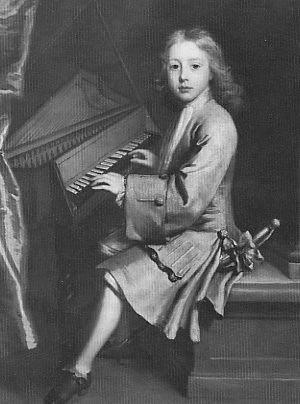
Education was not held in the highest level of esteem for the upper class. They considered public education as “sinks of iniquity, where boys learned nothing but a smattering of Horace and very gross, unpolished manners.”2 This lecture here deciphers a painting by Benjamin West in order to enlighten us about the education of middle-class boys.
In contrast, Deborah Simonton brings our attention to the pervasive view of English working-class girls. She notes, “English working-class girls’ education was very little, and that females remained largely illiterate throughout the eighteenth century. The history of girls’ educational experience is frequently treated as an adjunct to boys’, or is simply subsumed by the term ‘children.’ Deborah continues in her article,
“The essence of the debate about poor children’s schooling was whether or not they should be taught at all. Demands for popular education came from many quarters at the end of the eighteenth century, but the intentions which lay behind those demands varied widely. They ranged from anxiety about the impact of social and economic change, to the importance of teaching Christian values, and with it the desire to improve the manners and morality
of the children of the labouring classes, and to the desire to keep the poor in their place.”3
In eighteenth-century times, the majority of the English population were working class poor people. As I have detailed above, education reform was paramount because the majority of the population was under-educated, especially in the working class which was comprised of poor people. The emergence of boarding schools during the early Methodist ministries was essential for children of Methodists. The London Foundling Hospital was a charitable children’s home and vocation school established by early Methodists.
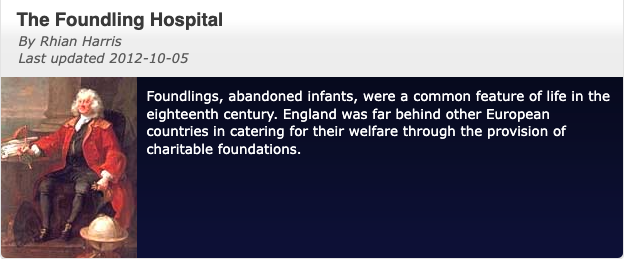
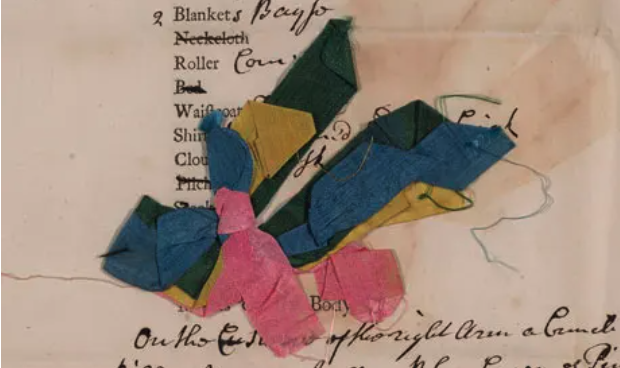
Rhian Harris notes, “One of the worst problems affected by the social conditions in London in the early eighteenth century was the large numbers of children either entirely abandoned or thrown on the tender mercies of the parish – illegitimate children were handed over to parish officers for a lump sum.”4 Poor children were dying at an alarming rate in the 1720s and 1730s. It was in the eighteenth century that a wave of philanthropic activity erupted in England – particularly as a means to address the poor conditions of the children. “In the mid-18th century thousands of poor women deposited their newborn babies at the Foundling Hospital. The scraps of material left to identify them tell an extraordinary story. By Kathryn Hughes”5
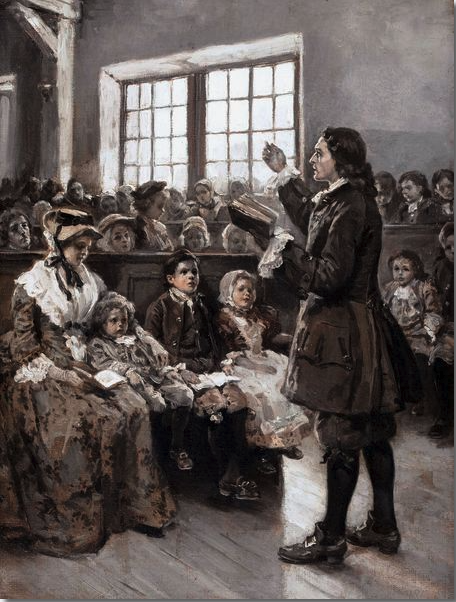
John Wesley cared deeply for children, especially for their education. If you recall, his mother, Susanna Wesley, would teach John and his siblings about God. She was a model to John on how to be a person of deep prayer. Of note, Wesley established the school for boys in Kingswood which would serve the children of Methodist preachers. In addition he established a school for the children of miners. This school would provide the basic vocational education that these children needed (primarily boys). This painting is of John Wesley teaching his Sunday school class by Alice Barber Stephens.
As a young boy growing up in a Southern Baptist pastor’s home (my dad & mom’s home), Joshua 24:15 was drilled into me whenever I didn’t want to go to church. “As for me and my house, we will serve the Lord.” I am grateful for my parents who insisted that I grow up in the church, receive a good education, and ensure that I was taught about God in a clear concise manner. You see, my mother played the piano for church, so I would frequently be found sitting next to her on the piano bench learning everything that I could about church music – it fascinated me.
John Wesley on the idea of family religion spoke these words, “On the contrary, what will the consequence be, if they do not adopt this resolution — if family religion be neglected — if care be not taken of the rising generation Will not the present revival of religion in a short time die away.”6 In another sermon, Wesley quotes Proverbs 22:6, “Train up a child in the way wherein he should go: And when he is old, he will not depart from it.” In the opening statements, Wesley exhorted the crowd that good children can sometimes come from the worst parents and some of the worst children can come from the best parents. Wesley challenges parents to impress upon their children the importance to “walk in love, as Christ also loved us, and gave himself for us; God is love; and he that dwelleth in love, dwelleth in God, and God in him.”7
Reference List
1 https://www.representingchildhood.pitt.edu/eighteencent_child.htm
2 English Country Life in the Eighteenth Century by Rosamond Bayne-Powell, p.13
3 British Journal for Eighteenth-Century Studies 23 (2000). p. 183-202
4 https://www.bbc.co.uk/history/british/victorians/foundling_01.shtml
5 https://www.theguardian.com/culture/2010/oct/09/foundling-hospital-museum-threads-feeling
 jacobtipantasig-wolverton